GZR Top 5 Android Phones - August
Every month I'm going to give a ranking list of Android phones, starting with August.
Rank 1: Motorola Atrix
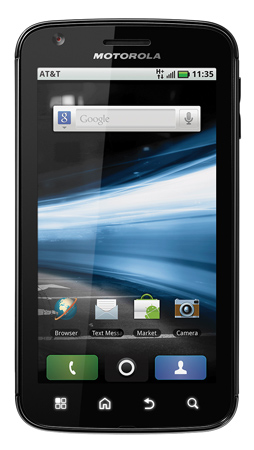
Specs:
Display - 4" qHD
Processor: NVIDIA Tegra 2 Dual-Core @ 1gHz
RAM: 1GB
Onboard Storage/SD Storage/Total Storage: 16GB/32GB/48GB
Camera: 5MP Rear, VGA Front.
Battery: 1930 mAh
Connectivity: 4G
Bonuses: Fingerprint scanner, laptop dock, Android 2.3 (Gingerbread).
The Motorola Atrix is just a very nice piece of equipment right now. It has the standard in hardware right now (1gHz dual-core and 1GB of ram), but it also comes with an enhanced battery to accommodate for it's 4G and 3G radios using more battery life. It has a very nice amount of expandable memory, enough to do whatever you would need with it. It has a nice qHD display, and is 4", so movie watching is fairly decent (but not as good as a 4.3" display!). It still needs it's Overall, a very good device and that is why it ranks #1.
Rank #2: HTC Evo 3D

Specs:
Display - 4.3" 3D qHDProcessor: Snapdragon Dual-Core @ 1.2gHz
RAM: 1GB
Onboard Storage/SD Storage/Total Storage: 8GB/32GB/40GB
Camera: 5MP dual-rear, 1.3MP Front.
Battery: 1730 mAh
Connectivity: 3G
Bonuses: 3D video recording @ 720p, 3D pictures, Android 2.3 (Gingerbread)
I'll admit, I'm not a huge 3D fan. But if we're talking about great phones, the Evo3D is undeniably number two. The hardware in it is superior to the Motorola Atrix for the most part. It has a larger display, faster processor, and can take 3D videos and pictures.Overall it was a very tough decision between the two, however the Evo3D did come out on bottom. While it's hardware is superior, the 3D effects and screen drain the battery life fast. At the same time, the Evo3D doesn't have the 4G-power-sucking hardware that the Atrix does. Also taking into account it's smaller battery, the Evo3D came out on bottom because of that. Smaller battery, no 4G (although it has better battery because of that), and smaller on-board storage (with this phone, you basically HAVE to get an SD card). It is great for media, however.
Rank #3: HTC Thunderbolt
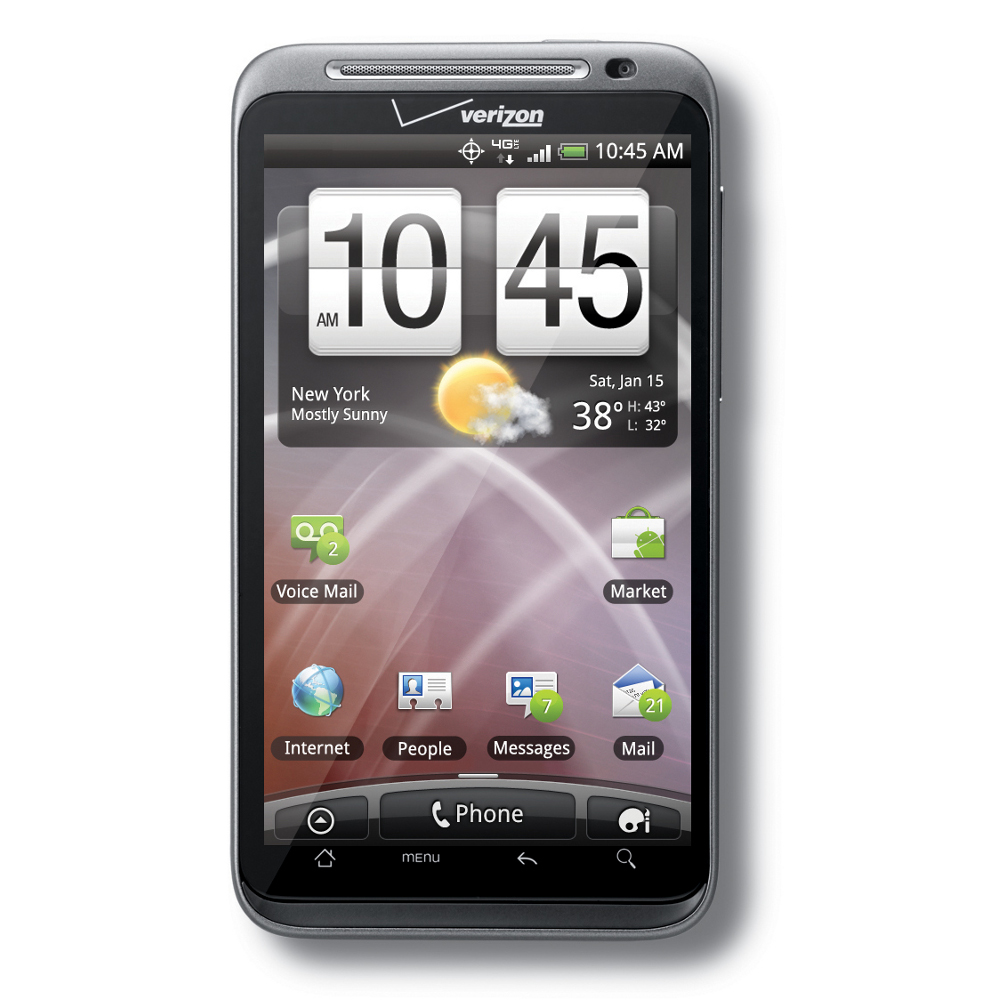
Specs:
Display - 4.3" WVGAProcessor: Snapdragon Single-Core @ 1gHz
RAM: 768MB
Onboard Storage/SD Storage/Total Storage: 8GB/32GB/40GB
Camera: 8MP dual-rear, 1.3MP Front.
Battery: 1400 mAh
Connectivity: 4G
Bonuses: Adreno 205 GPU built into its processor.
The HTC Thunderbolt, when released, was a revolutionary device with it's 4G LTE connection through Verizon. That being said, the hardware at a glance looks a little lacking. It's rocking a very clear 4.3" WVGA display, however the juice behind that display is only a 1gHz snapdragon. That being said, the RAM is a little below industry standard right now of 1GB (Thunderbolt has 768MB). The storage is lacking, so you will have to get an SD card. The cameras in it are the best in the industry right now for smartphones (8MP rear is above-average and 1.3MP front is excellent). You do have 4G connectivity with the Thunderbolt, but unless you KNOW you are going to get 4G coverage, I don't recommend having it enabled seeing as how it's only rocking a 1400 mAh battery. If you buy an aftermarket 1930 mAh battery for the Thunderbolt, you will be very happy with this device. It's got surprisingly good loads for only having a single core (probably because of the Adreno GPU in it). It's biggest downfall is that it has yet to receive Android 2.3 Gingerbread. Overall, if you're looking for a 4G device from HTC and don't want 3D (like me!), the Thunderbolt is your best bet.
Rank #4: HTC Droid Incredible 2

Specs:
Display - 4" S-LCD WVGAProcessor: Snapdragon Single-Core @ 1gHz
RAM: 768MB
Onboard Storage/SD Storage/Total Storage: 16GB/32GB/48GB
Camera: 8MP dual-rear, 1.3MP Front.
Battery: 1450 mAh
Connectivity: 3G
Bonuses: Adreno 205 GPU built into its processor, Android 2.3 (Gingerbread)
Following up on it's incredible (no pun intended) father, the Droid Incredible, the DInc2 is a beast of a phone. It sports a 4" Super LCD screen with the 1gHz Snapdragon processor with the built in Adreno 205 GPU. It's got a relatively average battery size, which is fine considering the screen is relatively small in today's terms and it isn't a 4G phone. It has the best cameras that smartphones have to offer right now, and comes with a nice heap of storage. Overall, the Droid Incredible 2 is a very close phone to #3.
Rank #5: Motorola Droid X2

Specs:
Display - 4.3" TFTProcessor:ARM A9 Dual-Core @ 1gHz
RAM: 512MB
Onboard Storage/SD Storage/Total Storage: 8GB/32GB/40GB
Camera: 8MP dual-rear
Battery: 1540 mAh
Connectivity: 3G
Bonuses: Android 2.3 (Gingerbread)
The DroidX2 was an amazing phone to place after it's original DroidX. The DroidX was the flagship phone of its time, but the DroidX2 isn't quite that. Rocking a nice 4.3" screen makes it great for media, and having that nice 1gHz dual-core makes it super snappy for that big screen. It comes with a moderate amount of storage, but is expandable. It's got a nice rear camera, but no front one. Being a 3G phone, its 1540 mAh battery will last you a reasonably long amount of time. Running on Android 2.3 Gingerbread, the DroidX2 is a very nice phone brought to us by the recently Google-acquired Motorola Mobility. The hardware in this phone keep it on the list, although its 512MB of RAM is the reason it is #5.


